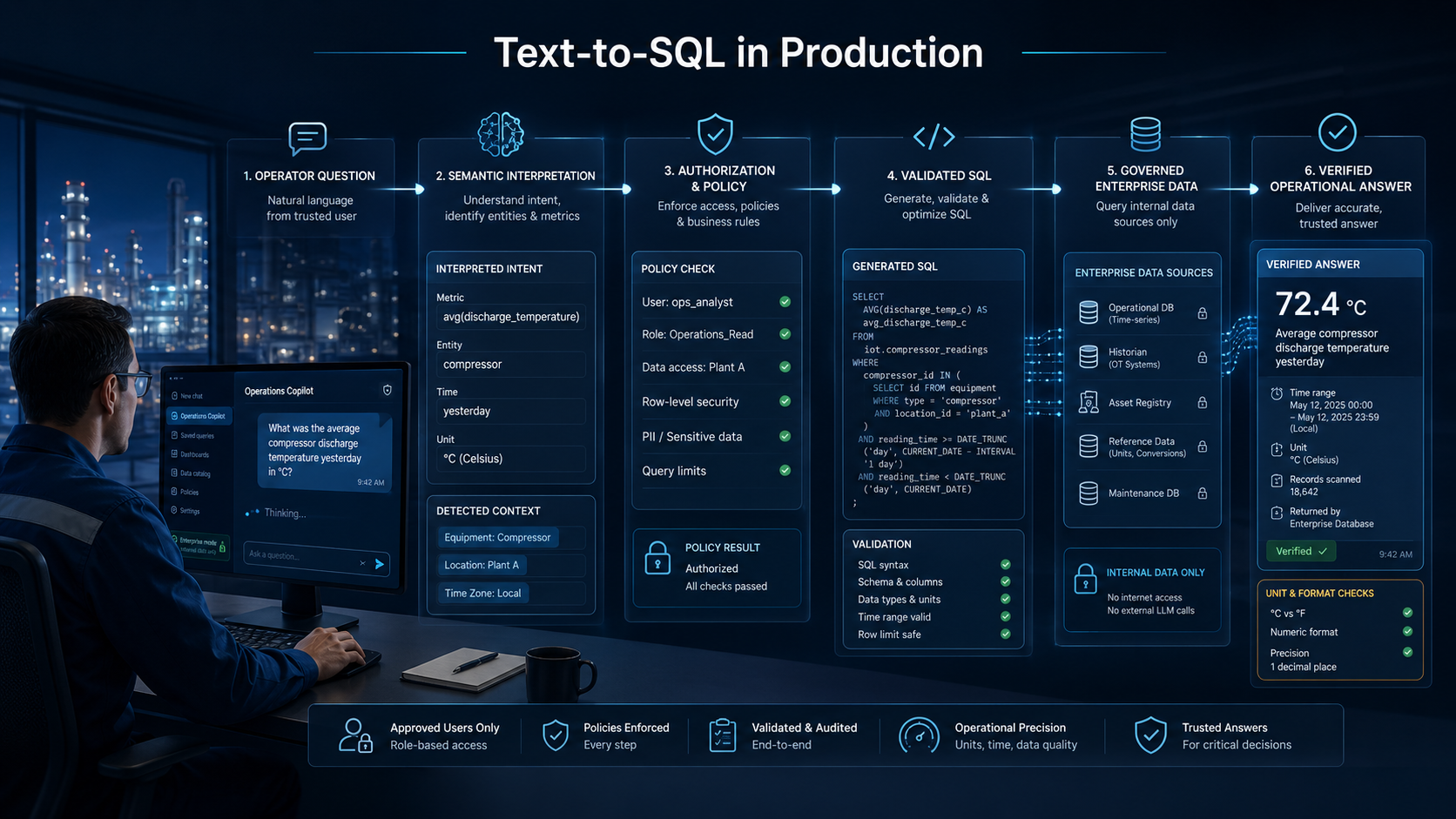
What Breaks First When Text-to-SQL Moves from Demo to Production?
13 min read
A practical look at semantic ambiguity, authorization, validation, observability, and the operational risks hidden behind a convincing conversational interface.

Thiago Goulart de Oliveira
Engineering Director
Based in Brazil. Working with distributed and international teams across the Americas.
ABOUT
I am an Engineering Director with 24+ years of experience across software engineering, solution architecture, product development, cloud platforms, entrepreneurship, and engineering management.
I currently lead the architecture and engineering delivery of enterprise AI products, including conversational and agent-based systems that combine LLM orchestration, structured data, APIs, Text-to-SQL, and cloud-native deployment.
Professional summary
I work where engineering leadership, architecture, enterprise AI, and product strategy meet accountable execution.
My career has developed at the intersection of engineering, architecture, product, and business.
I started as a software engineer, moved into solution architecture and project leadership, and later became Managing Director of a technology company and its B2B mobility product. That experience expanded my responsibilities beyond software: product strategy, operations, commercial priorities, fundraising, organizational growth, customer commitments, and the consequences of technical decisions.
I later returned to hands-on architecture and engineering consulting, designing cloud, integration, and data solutions across AWS, Azure, and Oracle Cloud Infrastructure. Today, I lead engineering work around enterprise AI platforms and agentic systems.
This path shaped how I approach technology leadership. I value technical depth, but I do not treat architecture as an isolated technical exercise. Systems must be secure, operable, financially responsible, understandable by the teams building them, and connected to a real business outcome.
Conversational AI, agentic systems, LLM orchestration, Text-to-SQL, governed enterprise data, evaluation, observability, and production reliability.
Engineering strategy, team development, coaching, technical standards, cross-functional alignment, delivery systems, and organizational effectiveness.
Cloud-native systems, distributed architectures, APIs, enterprise integration, data platforms, security, resilience, and multi-cloud environments.
Product engineering, business and technology alignment, commercialization, platform evolution, organizational scaling, and pragmatic technical decision-making.
Software Engineer -> Technical Lead -> Solutions Architect -> Project Manager -> Managing Director -> Senior Solutions Architect -> Engineering Director
Each role added a different operating context: building software, designing solutions, leading delivery, owning product and business consequences, and guiding engineering work across enterprise AI and architecture.
A focused set of articles on production AI, architecture, product engineering, and career reinvention.
A practical look at semantic ambiguity, authorization, validation, observability, and the operational risks hidden behind a convincing conversational interface.

A practical framework for distinguishing software, solution, and system architecture by the decisions each discipline owns and the outcomes for which it is accountable.
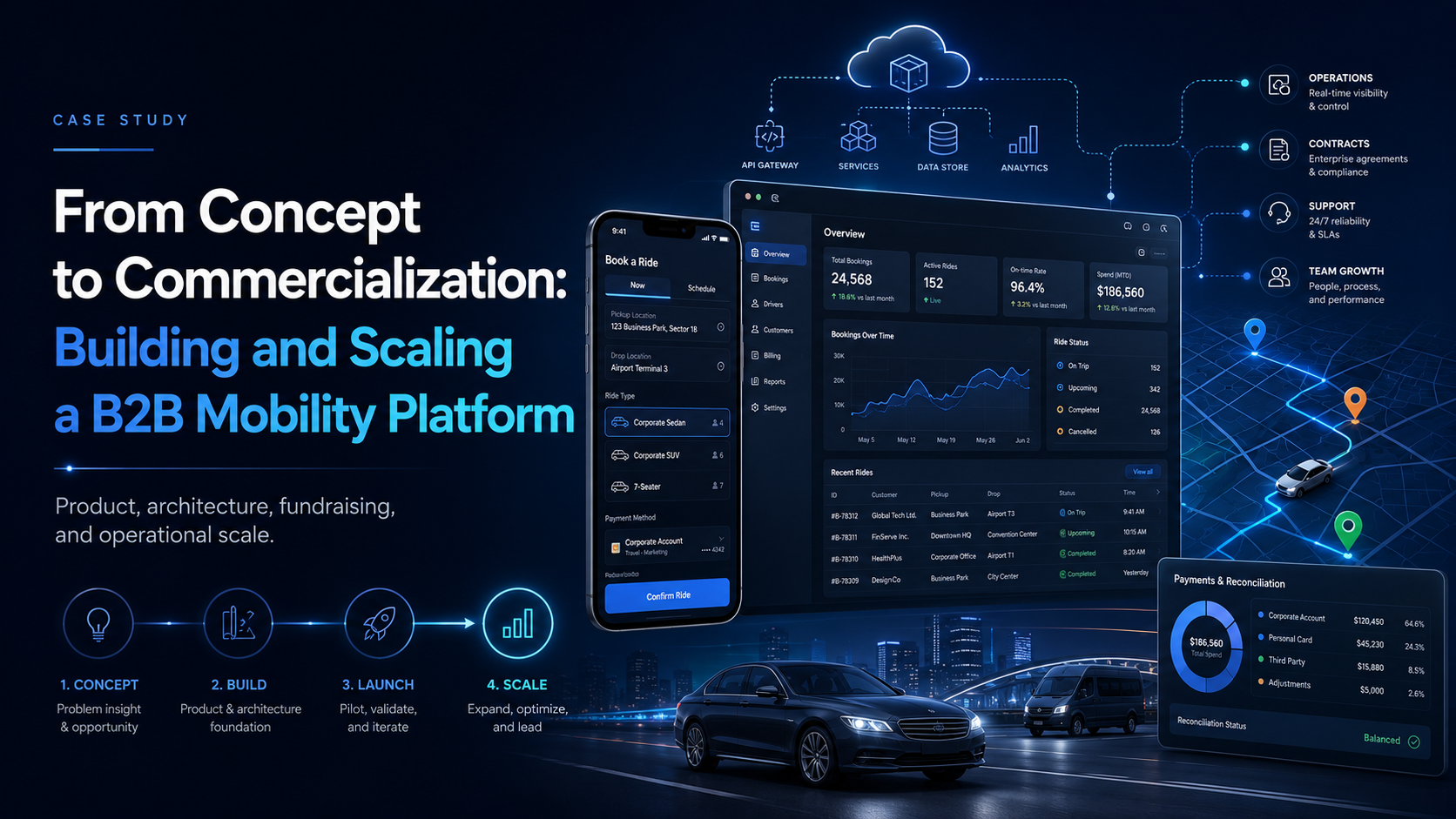
A case study on turning a product concept into a commercial B2B mobility platform—and the technical, organizational, and business lessons learned along the way.

Reflections on a career shaped by software engineering, architecture, entrepreneurship, leadership, and the need to keep learning.
A technically correct solution can still be the wrong solution when it ignores the business objective, operating environment, team capability, or cost.
Every architecture decision creates constraints. Good leadership makes those trade-offs visible instead of presenting decisions as universally correct.
Teams perform better when they understand the outcome, the boundaries, and the standards - and have space to decide how to deliver.
Reliability, observability, security, cost, support, and incident response should be designed with the product, not added after development.
New technologies matter when they improve a real system or business outcome. Adoption should be guided by evidence, not novelty.
I am interested in engineering leadership and architecture opportunities involving enterprise AI, cloud platforms, distributed systems, product engineering, and organizational growth.
For professional conversations, connect with me on LinkedIn or explore selected work.